
When John Kostrzewa ’74 retired in 2017 after more than four decades as a newspaper reporter, editor and columnist, he turned to hiking. Three times a week, he set out from his Cranston, Rhode Island, home to walk paths across the state. After encountering a surge of newcomers on the trails during the pandemic, Kostrzewa pitched a hiking column to The Providence Journal, where he spent the majority of his career. The column, “Walking Rhode Island,” quickly became a popular recurring feature. In 2023, Kostrzewa turned that column into a book, “Walking Rhode Island: 40 Hikes for Nature and History Lovers,” chronicling the history, geology, wildlife and vegetation of easy, moderate and challenging hikes across the Ocean State.
Before hitting the trail in the Blackstone River Valley National Historic Park in Lincoln, Rhode Island, Kostrzewa opened his pack to show HCM his essentials for warm-weather day hikes … and shared the question that piqued his curiosity so much, he’s exploring it for his second book.
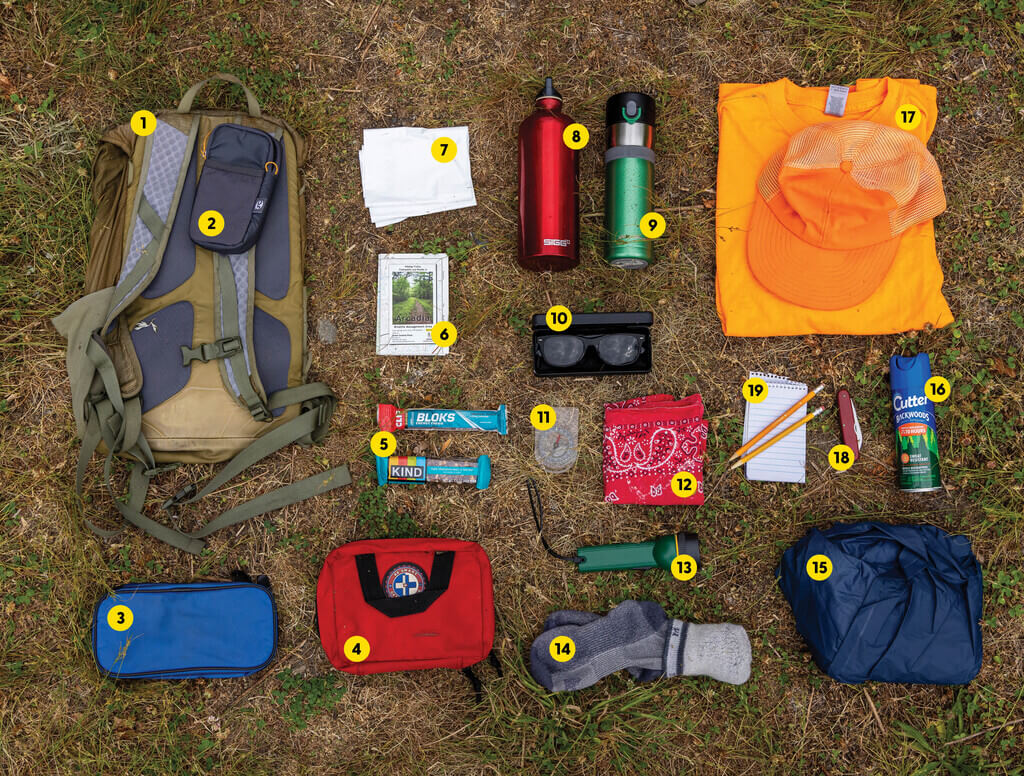
1./2. REI Co-op day pack/Gossamer Gear Shoulder Strap Pocket. This lightweight day pack has plenty of pockets. My pack is my lifeline. It never leaves me. I keep my cell phone in this small pouch for easy access when taking pictures for the column.
3. Zipper pouch. I store valuables like my wallet or keys inside this pouch.
4. Be Smart Get Prepared first aid kit. No matter how long your hike is, you should always have a first aid kit. This contains basic items for wound care, injuries or allergic reactions. I also keep my sunscreen in here and apply before and during a hike.
5. KIND Dark Chocolate Nuts & Sea Salt Bar/CLIF Bloks Energy Chews. We lose calories when we hike, so we need to replenish that fuel.
6. Printed map (Arcadia Management Area). I am old school. I love paper maps. They’re easy to read, and you don’t risk losing access if your digital device fails.
7. Trash bags. You need to pack out any trash. I also remove at least one piece of litter from the trail. We should leave a place cleaner than we found it.
8./9. SIGG Traveller water bottle/Eddie Bauer thermos. I bring two liters of water and stop every half hour to drink. If you wait until you’re thirsty, you’ve waited too long.
10. Ray-Ban sunglasses. A lot of Rhode Island trails lead to sunny pastures, so it’s important to protect your eyes.
11. Suunto compass. A compass can save a lot of time trekking in the wrong direction, potentially through unfavorable territory. It’s simple to use, but watch a tutorial first.
12. Bandana. I tie a bandana around my neck to prevent sunburn, on my forehead to help with sweat, or, if I ever hurt my arm, I could wrap it around as protection.
13. Hand-held flashlight. When hiking in the spring or the fall, it can get dark fast. Plus, if you get hurt, a flashlight may become necessary.
14. REI Co-op Merino Wool Midweight Crew Hiking Socks. A wet sock can quickly cause blisters. If you step in a swamp or stream, dry socks make the rest of the hike a much better experience.
15. Hurley poncho. New England weather changes quickly, and this hooded rain poncho is lightweight and folds into a small square.
16. Cutter Backwoods Insect Repellent. Ticks, which can transmit Lyme and other diseases, are on the rise. It’s crucial to minimize risk. I always wear long pants tucked into tall socks, stay on the trail, avoid vegetation and apply insect repellent spray before and during hikes. I wear light-colored clothing so ticks are easier to spot. I do tick checks after hikes and tell anyone with a dog to bring a comb to check their fur. I remove clothes as soon as I’m home and wash them outside.
17. Hanes Cool DRI shirt/Falari blaze orange cap. During hunting season, Rhode Island state management areas require hikers to wear a certain number of inches of orange to stand out. I opt to wear orange year-round. I keep an extra orange shirt in my pack, and a lightweight mesh hat protects from the sun.
18. Victorinox pocket knife. This is so useful … I can sharpen my pencils, cut a bandage, repair gear, etc.
19. Notepad/pencils. I handwrite notes on the trail. I don’t rush to the destination. I take my time and observe. What do I see, feel, smell, hear? What do I need to research later? I use pencils instead of pens as ink can clog. For my next book, I have started researching, ‘Who are the people who volunteered their time and energy to make these hiking trails available to us today?’ Stay tuned.


