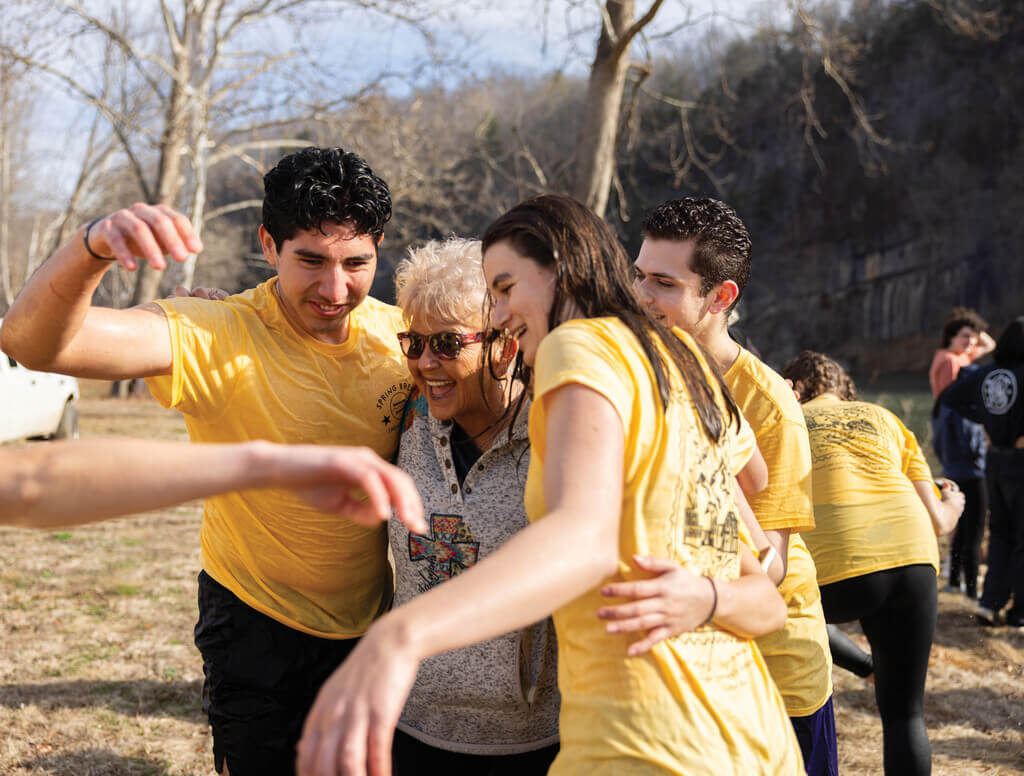
“I think of service as charity, which in and of itself is not bad,” Ibrahim says. Charity is meeting an immediate need, such as serving in a soup kitchen or helping at an after-school program. But SBIP is shifting the focus from solely charity to also incorporating values of simplicity, social justice, solidarity and spirituality; not just meeting a community’s needs, but understanding the underlying systems that create those needs and living in solidarity alongside the community.
“Immersion also means to be in mutuality with our community partners, building an authentic and genuine relationship where it’s mutually enriching,” Ibrahim says. Even with this distinction, however, Ibrahim acknowledges that it is still important to maintain open conversations with both the students and the community partners about what the SBIP experience looks like before, during and after the week. “The reality is we’re building relationships with people so we can also come back and see what the reality is in our community and respond,” she says. “But I’m also aware of: How does it look to sustain that relationship after that week?”
“Going into it, I was a little bit confused, because [I thought] there was not going to be much of a lived difference between service and immersion,” says Ivanhoe participant Grace Evans ’26. “We knew that we were there to form connections as opposed to just work, and so we would sit at the table until late hours of the night, or we would be the first ones up in the morning talking to [residents]. We were there to hear their stories and all of us had this curiosity about Ivanhoe. I was more focused on talking to people than doing work. Yes, I was there to pick up sticks and pick up trash, but, realistically, those are kind of insignificant things compared to the relationships we actually formed. When I think about impactful moments, it’s the conversations we had as opposed to what we accomplished.
“I learned service is doing the work, and obviously being helpful is still important and appreciated by the community, but immersion was so much more powerful because it has that reciprocity,” she continues. “Service is ‘What can I do for you?’ Whereas immersion is ‘What can we do for each other?’”